Bali vs Gili Islands vs Nusa Penida: Which Indonesian Dive Destination is Best?
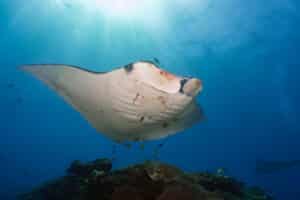
Indonesia is a diver’s dream. Made up of more than 17,000 islands spanning almost two million square kilometres, it offers an endless variety of underwater adventures. From colourful coral reefs to legendary shipwrecks and giant manta rays, there’s no shortage of incredible dive sites.
With so many options, choosing where to dive can be overwhelming. Three destinations that consistently top the list are Bali, the Gili Islands, and Nusa Penida. I’ve been lucky enough to dive all three, and while each offers something unique, they deliver very different experiences.
Here’s how they compare.
Bali (Tulamben)
I first visited Bali in 2023. Being only a few hours from Australia, it’s the perfect destination for a long weekend of diving. We based ourselves in Tulamben on Bali’s northeast coast, a small town famous for its shore diving, macro life and the iconic USAT Liberty wreck.
The Highlights
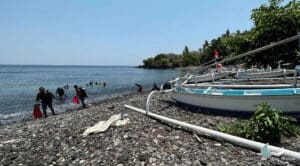
One of Tulamben’s biggest advantages is how easy the diving is. Local porters carry your gear from the dive centre to the water, so you’ll barely lift a finger. The beaches are covered in smooth volcanic pebbles rather than sand, which means far less mess when cleaning your equipment afterwards.
If you’re a fan of macro life, Tulamben is hard to beat. Every dive reveals something different, from octopus and pygmy seahorses to nudibranchs and other weird and wonderful critters that seem almost alien.
The water was incredibly warm during our October visit, reaching around 31°C. It was one of the very few places where I was comfortable diving in just a shorty instead of my usual 5mm wetsuit.
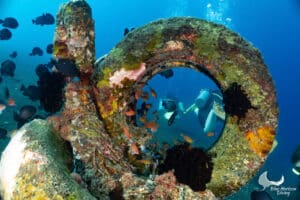
Of course, the highlight is the USAT Liberty Wreck. Sitting just metres from shore, it’s one of the most accessible wreck dives in the world. Whether you’re scuba diving, snorkelling, diving during the day or exploring it at night, it’s an unforgettable experience suitable for almost every level of diver.
The Downsides
If you don’t enjoy shore diving, Tulamben probably isn’t for you. Entering and exiting over the rocky beach can be challenging when the swell picks up.
Like many tourist destinations in Indonesia, the beach can also be busy with vendors selling souvenirs who can be quite persistent.
While the macro life is fantastic, larger marine life is relatively scarce. If your dream dive involves sharks, manta rays or other pelagic species, you’ll likely find yourself wanting more.
My Verdict
6/10
Tulamben is a fantastic destination for beginner divers, macro photographers and anyone wanting relaxed, warm-water shore diving. Personally, I prefer encounters with larger marine life, so while I enjoyed Bali, it wasn’t my favourite Indonesian dive destination.
Gili Air
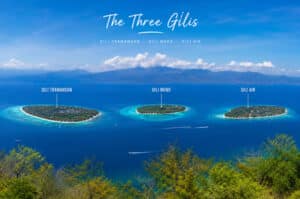
The Gili Islands consist of Gili Trawangan, Gili Air and Gili Meno. We chose to stay on Gili Air to escape the party scene of Gili T while still having easy access to dive sites around all three islands.
The Highlights
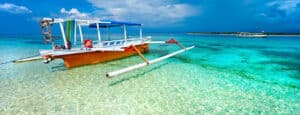
Gili Air itself is a beautiful place to stay. With no cars or motorbikes, the island has a peaceful atmosphere that’s a refreshing change from busier parts of Indonesia. It’s easy to walk everywhere, and there are plenty of dive centres within minutes of most accommodation.
The dive sites are also incredibly close, with many boat rides lasting less than ten minutes.
The shallow reefs were colourful and healthy, filled with coral and tropical fish. While they weren’t dramatically different from Nusa Penida’s reefs, they were still enjoyable to explore.
The standout experience was the night diving. Watching mating mandarin fish perform their nightly dance was one of the coolest underwater encounters I’ve ever had. I’d happily return just for that dive.
The food on Gili Air was also excellent, especially the sushi!
The Downsides
Originally, we only planned to spend two nights on Gili Air before heading to Komodo National Park. Unfortunately, Komodo closed due to an ongoing police investigation, forcing us to extend our stay to seven nights before continuing to Nusa Penida.
Unfortunately, the diving simply didn’t live up to expectations.
Many dives involved descending beyond 30 metres, where there was very little to see. Guides explained they stayed deep because that’s where pelagic species are most likely to appear, but despite spending a week diving there, we didn’t encounter any.
The dive sites also felt crowded. Many are popular training locations, meaning large numbers of beginner divers, multiple boats overhead and plenty of damaged coral caused by poor buoyancy.
After only two days, we actually reduced the number of dives we were doing. Instead of three dives each day, we often chose just a single night dive and spent the rest of the day enjoying the island instead.
My Verdict
4/10
There’s nothing inherently wrong with diving around the Gili Islands, it just wasn’t particularly exciting for us. Gili Air is a lovely island with great restaurants and a relaxed atmosphere, but based on our experience, I wouldn’t return specifically for the diving.
Nusa Penida
After a disappointing week on Gili Air, we headed to Nusa Penida.
I’d actually dived here once before as a day trip from Bali, but that experience was cold, murky and underwhelming. This visit completely changed my opinion.
Nusa Penida is famous for dramatic cliffs, Kelingking (T-Rex) Beach and, of course, diving with manta rays.
The Highlights
The visibility was some of the best I’ve ever experienced. The reefs were vibrant, healthy and packed with marine life. Every dive felt exciting, with something new around every corner.
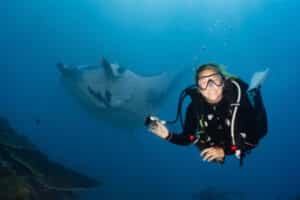
The manta ray dive was unforgettable. We spent almost the entire dive watching three manta rays circling a cleaning station, with no other divers nearby. It felt like we had front-row seats to one of nature’s greatest shows.
Dive operators understand that manta rays are the main attraction and make every effort to get divers there safely, even though the boat ride can be challenging.
The drift diving was equally impressive. Strong currents bring nutrients—and with them, larger marine life like reef sharks and turtles. Fast drifts over colourful coral gardens made every dive feel like flying underwater.
Most operators run three-dive days with lunch served during the surface interval, creating a relaxed and social atmosphere between dives.
The Downsides
Exploring Nusa Penida on land isn’t nearly as easy as diving it. The roads are rough, steep and often in poor condition, making getting around time-consuming.
Conditions underwater can also be unpredictable. We were fortunate to enjoy warm water and manageable currents, but the area is known for sudden temperature drops and strong currents that can occasionally make diving unsafe.
One disappointing aspect was the amount of rubbish floating on the surface. Several dives ended with us surfacing amongst floating plastic, a stark reminder of the environmental challenges facing many tropical destinations.
My Verdict
8/10
Nusa Penida has easily been my favourite Indonesian dive destination so far. The combination of healthy coral, crystal-clear water, manta rays, drift dives and abundant marine life made every dive memorable.
I’d happily return—but Indonesia has so many incredible dive destinations that my next goal is still Komodo National Park.
Final Thoughts
Each destination offers something completely different.
Tulamben is ideal for macro lovers, wreck enthusiasts and beginner divers looking for easy shore diving.
Gili Air is a fantastic island to relax on, with beautiful night diving, but the daytime diving didn’t quite live up to expectations for us.
Nusa Penida delivered the complete package, healthy reefs, incredible visibility, thrilling drift dives and unforgettable encounters with manta rays.
Of course, Indonesia has so much more to offer. Komodo National Park is still sitting firmly at the top of my bucket list after our plans were unexpectedly cancelled.
Hopefully, we’ll finally make it there soon, and maybe even run a group trip in the future.
Until then, we have plenty of incredible dive adventures planned over the next few years. Be sure to check out our upcoming trip calendar, you might just find your next underwater adventure.