Pressure and Density at Depth: Why It Matters When Scuba Diving
When we scuba dive, our bodies and equipment are affected in many ways by changes in pressure and gas density as we descend.
Understanding these changes doesn’t just help explain some of the physics behind scuba diving. It can also help improve your buoyancy control, air consumption and overall diving skills.
So, what actually happens as we descend?
Pressure
As we descend underwater, pressure increases.
Water has weight, and the deeper we go, the more water there is above us exerting pressure.
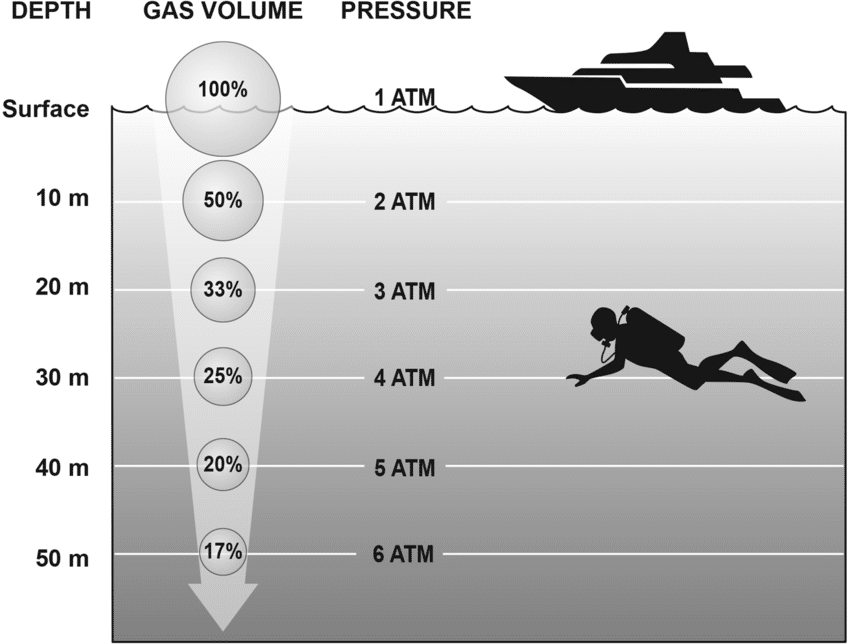
In seawater, pressure increases by approximately 1 atmosphere (ATA) for every 10 metres / 33 feet of depth.
For simplicity, we’ll use metres throughout this blog.
At the surface, we’re already under approximately 1 ATA of pressure from the atmosphere.
This means:
| Depth | Absolute Pressure |
| Surface | 1 ATA |
| 10 m | 2 ATA |
| 20 m | 3 ATA |
| 30 m | 4 ATA |
| 40 m | 5 ATA |
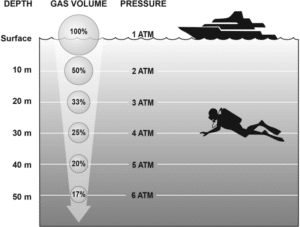
Water is effectively incompressible at recreational diving depths, so increasing pressure has very little effect on the water contained within our bodies.
The important bits for divers are our gas-filled spaces.
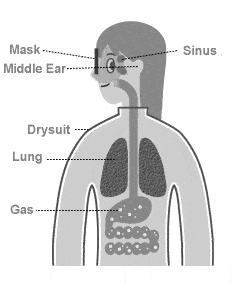
There are four particularly important gas spaces to think about when scuba diving:
- Ears
- Sinuses
- Lungs
- Mask
As the surrounding pressure changes, the pressure within these spaces needs to change too.
Ears and Sinuses
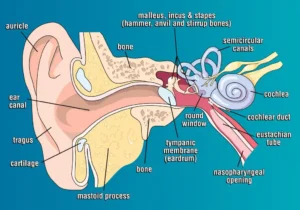
As you descend, the increasing surrounding pressure causes the gas within your middle ear to decrease in volume.
Unless you add gas to compensate, a pressure difference develops across your eardrum. This is why we need to equalise our ears early and frequently during descent.
There are several ways to do this.
The Valsalva Manoeuvre
The most commonly taught technique is the Valsalva manoeuvre.
Pinch your nose and gently blow against your closed nostrils. This increases pressure behind the nose and can open the Eustachian tubes, allowing air to enter the middle ears.
You may feel your ears gently “pop” as the pressure equalises.
The key word here is gently. Equalisation should never require force.
The Frenzel Manoeuvre
Another technique is the Frenzel manoeuvre, which is particularly popular with freedivers.
Instead of generating pressure from the chest and lungs, Frenzel uses the tongue and throat muscles to compress a small amount of air in the upper airway. This increases pressure behind the nose and helps open the Eustachian tubes.
Some divers find this easier and more effective than Valsalva.
Swallowing
For some lucky divers, simply swallowing, moving the jaw or wiggling the jaw from side to side is enough to open the Eustachian tubes and equalise the ears.
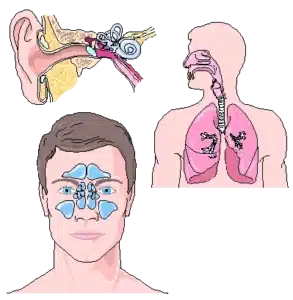
Sinuses usually equalise passively through their natural openings. If these passages are obstructed — for example by congestion — pressure differences can develop and cause sinus pain or barotrauma.
IF YOU CANNOT EQUALISE, DO NOT CONTINUE DESCENDING
This is one of the most important rules of scuba diving.
If you continue descending without equalising, the increasing pressure difference across the eardrum can cause significant pain and eventually middle-ear barotrauma or eardrum perforation.
Instead, stop your descent and ascend slightly until the pressure or discomfort resolves. Try equalising again gently.
Moving your jaw, swallowing or changing the position of your head may help.
If, after several attempts, you still cannot comfortably equalise: END THE DIVE.
Yes, it sucks. But missing one dive is considerably better than missing several weeks of diving because you’ve injured your ears!
Why Are the First 10 Metres the Hardest?
Equalisation is particularly important during the first 10 metres.
Why? Because this is where the largest proportional pressure change occurs.
From the surface to 10 m:
1 ATA → 2 ATA
The pressure has doubled.
From 10 m to 20 m:
2 ATA → 3 ATA
That’s only a 50% increase.
From 20 m to 30 m:
3 ATA → 4 ATA
That’s only a 33% increase.
So although every additional 10 metres adds approximately another atmosphere of pressure, the relative change becomes progressively smaller.
This is why you may find yourself equalising constantly during the first few metres and much less frequently once you’re deeper.
Your Mask
Your mask is another gas-filled space that needs to be equalised.
Fortunately, this one is incredibly easy. Simply breathe a little air out through your nose into your mask as you descend.
If you don’t, the decreasing volume of gas inside the mask creates negative pressure relative to the surrounding water. The mask is pulled increasingly tightly against your face, potentially causing mask squeeze.
And remember: your mask strap doesn’t need to be ridiculously tight! Once underwater, the surrounding pressure helps hold the mask against your face. An excessively tight strap can actually make diving less comfortable.
Your Lungs
Your lungs are arguably your most important gas space, they do keep you alive, after all!
Fortunately, when scuba diving they are also straightforward to keep equalised.
Just keep breathing normally and never hold your breath.
Your regulator supplies breathing gas at approximately the same pressure as the surrounding water. As you descend, therefore, the regulator automatically delivers gas at progressively higher pressure. The major danger occurs if you hold your breath while ascending.
As you ascend, surrounding pressure decreases, so gas in the lungs expands. If expanding gas cannot escape because you are holding your breath, it can potentially cause a lung overexpansion injury.
This is why one of the first rules every scuba diver learns is:
Never hold your breath while scuba diving.
You’ve got the tank , you may as well use it!
As Pressure Increases, Gas Density Increases
Now things get particularly interesting.
As pressure increases, the density of our breathing gas also increases.
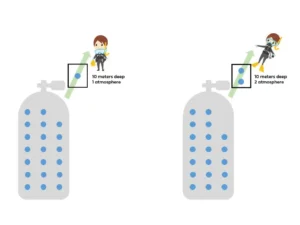
At roughly constant temperature, gas density increases approximately in proportion to absolute pressure. So at 30 metres, where the ambient pressure is approximately 4 ATA, the air delivered by your regulator is approximately four times as dense as air at the surface.
Importantly, this does not mean that individual gas molecules become four times smaller.
The molecules themselves don’t shrink. Instead, the increased pressure means that more gas molecules are packed into the same volume.
Think of a crowded elevator: the people haven’t become smaller, you’ve simply squeezed more people into the same space.
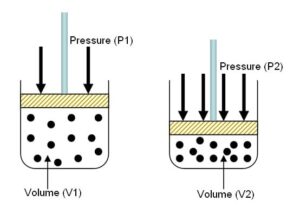
This increasing pressure and compression of gas has several important consequences for divers, including:
- Air consumption
- Buoyancy
- Exposure protection
Air Consumption
The deeper you go, the faster you use the gas in your cylinder.
At 30 metres, the surrounding pressure is approximately 4 ATA. Your regulator therefore needs to supply each breath at roughly four times surface pressure.
Your lungs may still inhale roughly the same physical volume with each breath, but that volume contains approximately four times as much gas when expressed as its equivalent surface volume.
So, all else being equal, at 30 metres you’ll consume gas from your cylinder approximately four times as quickly as you would at the surface.
This is why monitoring your SPG becomes increasingly important on deeper dives.
Your tank hasn’t developed a leak. It’s just physics!
Buoyancy
Pressure also has a major effect on buoyancy.
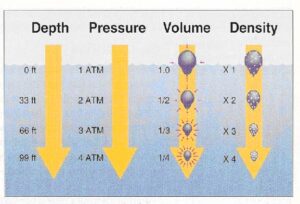
Gas spaces compress as we descend. This includes the air in your BCD and, importantly, the tiny gas bubbles within your wetsuit.
As these gas spaces decrease in volume, they displace less water and therefore provide less buoyancy. This means you’ll generally need to add air to your BCD as you descend to maintain neutral buoyancy.
But remember what happens on the way back up.
As you ascend, pressure decreases and the gas in your BCD expands.
If you don’t release some of that expanding gas, you’ll become increasingly positively buoyant, potentially causing an uncontrolled ascent.
This is why good buoyancy control isn’t simply about adding air on the way down. It’s also about progressively releasing expanding air on the way back up.
The effect becomes particularly noticeable close to the surface because, once again, that’s where the greatest proportional pressure changes occur.
Exposure Protection
Your wetsuit is affected by pressure too.
Neoprene contains huge numbers of tiny gas bubbles. These bubbles are responsible for much of neoprene’s insulation and buoyancy.
As you descend, increasing pressure compresses these bubbles. The neoprene therefore becomes thinner, less buoyant and less insulating at depth.
This explains why you may notice that you’re considerably more negatively buoyant at the bottom of a deep dive than you were near the surface. It also means that you may feel colder during deeper dives.
If you’re planning deeper or longer dives, make sure your exposure protection is appropriate for the depth, water temperature and duration of the dive, not simply how warm the water feels when you first jump in.
What About Fresh Water?
Everything we’ve discussed so far has used seawater.
Fresh water is slightly less dense than seawater, so pressure increases very slightly more slowly with depth.
As a useful approximation:
Seawater: +1 ATA approximately every 10 m
Fresh water: +1 ATA approximately every 10.3 m
For most recreational diving calculations the difference is relatively small, but it’s another reminder that the density of the water around us affects pressure too.
It’s also why you’re more buoyant in salt water than fresh water: denser seawater provides a greater buoyant force for the same displaced volume.
The Take-Home Message
Pressure is one of the fundamental pieces of physics that makes scuba diving work.
As you descend:
Pressure increases → gas spaces compress → breathing gas becomes denser.
That affects your ears, mask, lungs, buoyancy, wetsuit and gas consumption.
And on ascent, many of those processes reverse.
Understanding what’s happening doesn’t mean you need to become a physicist every time you put on a scuba tank.
But the better you understand why your equipment and body behave differently at depth, the easier it becomes to anticipate those changes, and ultimately become a safer, more comfortable and more skilled diver.
It’s not magic. It’s just physics!
Click HERE to try out some buoyancy skills!