Diving in Bermuda: Exploring the Shipwreck Capital of the Atlantic
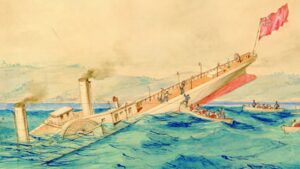
Surrounded by the deep blue waters of the Atlantic Ocean, Bermuda is a small island with a huge maritime history. Located around 650 miles from its nearest landmass, Bermuda has long been an important waypoint for ships crossing the Atlantic.
For many people, Bermuda is best known for the mysterious Bermuda Triangle. The infamous area where ships and aircraft have supposedly disappeared without explanation. But beneath Bermuda’s beautiful turquoise waters and famous pink-sand beaches lies a far more tangible history: hundreds of shipwrecks waiting to be explored.
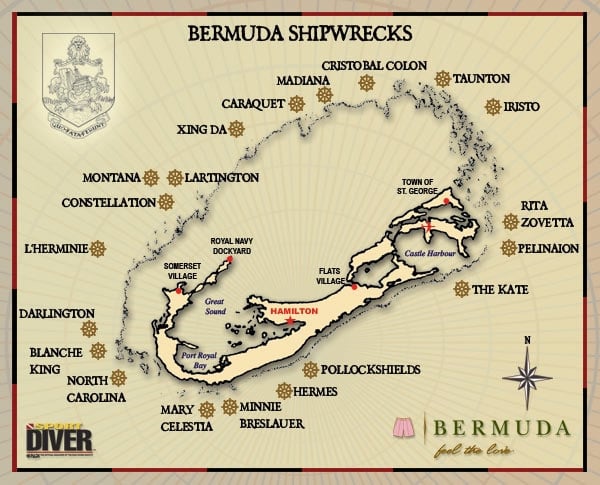
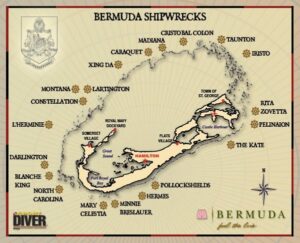
With more than 300 known wrecks scattered around the island, Bermuda is often described as the shipwreck capital of the Atlantic. Some wrecks are centuries old, while others were deliberately sunk to create artificial reefs.
Here are five fascinating wrecks that showcase just how much history lies beneath Bermuda’s waves.
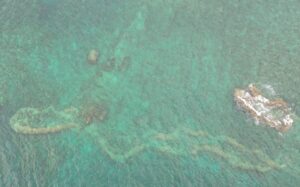
The Mary Celestia
The Mary Celestia was a Confederate blockade runner during the American Civil War. A British-built side-wheel steamer, she was launched in 1864 and became one of the fastest ships of her time.
Her speed wasn’t her only advantage. The Mary Celestia was designed to be difficult to detect. Her low hull made her difficult to spot against the horizon, while the coal she burned produced white smoke rather than the thick black smoke normally associated with steamships.
That white smoke could blend into the clouds, helping her approach Confederate ports undetected, unload valuable cargo and escape before Union ships could be dispatched to intercept her.
On September 6, 1864, the Mary Celestia was sailing from Bermuda towards Wilmington, North Carolina. She was carrying ammunition, medicine, mail and other supplies. As she headed away from the island, she struck Bermuda’s southern reef line.
Bermuda’s reefs often rise almost to the surface, creating a dangerous barrier for ships unfamiliar with the island’s coastline. The Mary Celestia struck the reef and sank, taking her cargo with her. Fortunately, all the crew survived.
Today, the wreck rests at around 17 metres (56 feet) and is one of Bermuda’s best-preserved historic wrecks.
The ship’s paddle wheels are still visible, with one remaining upright, while sections of the bow and anchor can still be seen. The shifting sands around the wreck also occasionally reveal new artefacts.
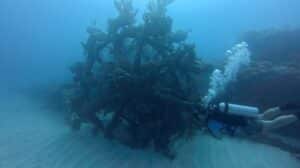
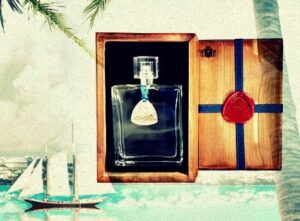
Perhaps the most fascinating discoveries came in the 2010s, when archaeologists recovered sealed bottles of wine and perfume from the wreck, more than 150 years after the ship sank. The perfume was subsequently recreated and is now available for purchase.
The Pollockshields
The Pollockshields was a 323-foot cargo steamer built in Germany in 1890. During the First World War, she was taken into British service and used as an ammunition ship.
On August 22, 1915, the Pollockshields departed Wales carrying more than 350 tonnes of ammunition and gunpowder.
As she approached Bermuda, the weather deteriorated dramatically. Dense fog combined with hurricane-force winds, making navigation extremely difficult. Only minutes later, the ship struck the reef off Elbow Beach on Bermuda’s South Shore.
Rescue efforts quickly began, with five trips being made to evacuate those aboard. Almost everyone survived, although the ship’s captain, Captain Booth, tragically drowned.
Today, the Pollockshields is one of Bermuda’s more accessible wrecks because of its proximity to shore. It can even be reached by shore diving. The wreck originally sat partially above the waterline. For years, locals and tourists would snorkel around the exposed sections, often injuring themselves on the rusting metal.
In 1960, the Bermuda Government hired legendary Bermudian wreck explorer Teddy Tucker to demolish sections of the ship and move the wreck below the surface.
Today, the Pollockshields rests between approximately 2 and 16 metres (6 and 52 feet). Divers can explore the ship’s boilers, engine and propeller, while sections of ammunition and shell casings remain scattered around the site.
The Rita Zovetta
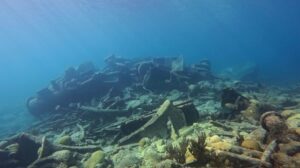
On Bermuda’s eastern end, near St. David’s Lighthouse, lies the Rita Zovetta, often simply called The Rita.
The Rita Zovetta was a 360-foot Italian cargo steamer built in Scotland in 1919. After changing ownership, the ship was renamed and converted to carry dry cargo.
And as the old saying goes, it’s bad luck to rename a ship.
In late February 1924, the Rita Zovetta was following a local pilot boat through Bermuda’s reefs. Pilot boats were used to guide larger vessels safely through the island’s complicated channels, but the rough winter conditions made the passage particularly challenging.
The ship struck the coral reef near St. David’s Lighthouse and began to sink. Initially, the Rita Zovetta remained partially above the water. However, a subsequent hurricane pushed the wreck further onto the breakers, eventually causing the ship to break apart and sink between February 13 and 24, 1924. Much of her cargo of manganese ore was salvaged, and remarkably, the entire crew made it safely ashore.
Today, the wreck is spread across the reef in depths of approximately 6 to 21 metres (20 to 69 feet). Her boilers, engine, propeller and stern section remain scattered across the reef, creating an impressive underwater playground of swim-throughs, passages and wreckage.
Following the Second World War, valuable non-ferrous metals such as copper pipes and condensers were removed from the wreck. Today, the site is protected by a 500-metre no-fishing zone. The combination of wreckage, reef and abundant marine life makes the Rita Zovetta one of Bermuda’s most popular dive sites.
The Pelanion
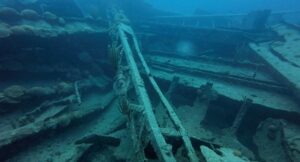
Not far from the Rita Zovetta lies another large wreck with a remarkably similar story: the Pelanion.
The Pelanion was a 385-foot Greek cargo steamer built in Port Glasgow in 1907. Originally named Hill Glen, the steel-hulled vessel passed through several owners and names before becoming the Pelanion in 1939.
Under the command of Captain Janis Valikos, the ship was making what would be his final voyage before retirement. The Pelanion was sailing from West Africa to Baltimore, Maryland, carrying iron and manganese ore, with a planned stop in Bermuda to take on fuel.
However, it was January 1940, and the Second World War had begun. As part of Bermuda’s defensive measures, British authorities had ordered the island’s lighthouses to be blacked out to prevent enemy forces from using them for navigation or intelligence gathering. This made Bermuda’s already difficult-to-see reefs even harder to identify.
Captain Valikos was unaware of the blackout and miscalculated the position of the reefs. The Pelanion struck the coral reef near St. David’s and sank on January 16, 1940. Fortunately, all 32 crew members escaped and were rescued. No lives were lost.
Today, the Pelanion lies in approximately 5 to 20 metres (16 to 66 feet) of water. The wreck is split into two main sections and spreads across the reef. Its enormous steam boilers still stand upright in the sand, creating an impressive sight for divers.
Like many of Bermuda’s wrecks, the Pelanion struck the reef with its bow before sinking, leaving the ship’s remains spread across the shallow reef. It’s a perfect example of how Bermuda’s reefs, weather and wartime history combined to create the incredible underwater landscape we see today.
The Sea Venture Ferry
Not every wreck in Bermuda is hundreds of years old.
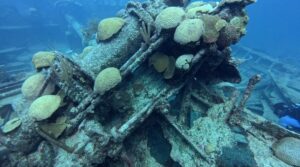
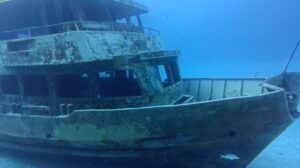
The Sea Venture Ferry is one of Bermuda’s more modern wrecks and was deliberately sunk in 2007 to create an artificial reef.
The ferry was an intra-island passenger vessel that once operated between Dockyard and Hamilton. After retirement, it was sold to the Bermuda Wreck Authority for the impressive price of $1.
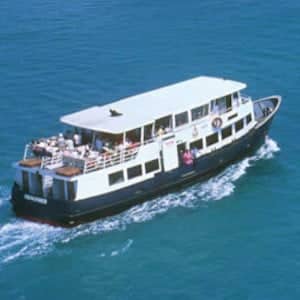
Before being sunk, the ferry was thoroughly cleaned, with fuel, oil, wiring and insulation removed. It was then scuttled near Eastern Blue Cut in around 15 metres (49 feet) of water.
“Scuttled” simply means deliberately sunk.
The Sea Venture is relatively small compared with Bermuda’s historic ocean-going wrecks, so it was positioned close to a reef. This means divers get the best of both worlds: a wreck to explore and a thriving natural reef surrounding it.
And if you look closely, you’ll even find a bicycle strapped to the roof.
Today, the ferry has been transformed from a vessel carrying passengers into a home for marine life. Fish and other creatures have made the wreck part of their underwater habitat.
Because it remains relatively intact and the surrounding water often offers excellent visibility, the Sea Venture Ferry is also a fantastic site for underwater photography.
Just don’t confuse it with the original Sea Venture, the ship that famously wrecked on Bermuda in 1609 and ultimately played a role in the island’s settlement.
So, Is the Bermuda Triangle Real?
These five wrecks represent just a tiny fraction of Bermuda’s underwater history.
With more than 300 known shipwrecks, Bermuda has an incredible collection of vessels scattered around its reefs and coastline. And while the Bermuda Triangle has inspired countless stories about aliens, mysterious forces and ships disappearing without explanation, the wrecks around Bermuda tell a much more realistic story.
Many were victims of poor visibility, challenging weather, navigation errors and Bermuda’s treacherous reefs. Bermuda’s location in the Atlantic means the island is regularly exposed to hurricanes and powerful storms. Today, we can track hurricanes days in advance. For sailors hundreds of years ago, these storms could appear with little warning.
Bermuda is surrounded by a huge network of shallow coral reefs, many of which rise surprisingly close to the surface. For a ship navigating the island before modern GPS, radar and detailed nautical charts, even a small navigational error could have disastrous consequences.
And if a ship missed Bermuda entirely, there was always the possibility of running out of fuel or supplies in the vast Atlantic Ocean.
Dive Into Bermuda’s History
From Civil War blockade runners and First World War ammunition ships to artificial reefs and modern ferries, Bermuda’s wrecks offer an incredible variety of diving.
The best part?
You don’t need to be a technical diver to experience much of Bermuda’s underwater history. Many wrecks sit in relatively shallow water, making them accessible to recreational divers and, in some cases, snorkellers.
And if you want to see what these wrecks look like beneath the surface, check out our video exploring Bermuda’s shipwrecks and the mystery of the Bermuda Triangle.