
Is Scuba Diving Safe?
If you’ve ever told someone you’re a scuba diver, you’ve probably been met with the same response:
“Isn’t that dangerous?”
Scuba diving has a reputation as a high-risk, adrenaline-filled activity. From decompression sickness to sharks and running out of air, there are plenty of reasons why people are nervous about taking their first breath underwater.
The truth? While scuba diving does come with risks, it’s far safer than many people think. Like any adventure sport, the key is understanding those risks and knowing how to manage them.
Let’s look at some of the biggest concerns people have about scuba diving, and why they shouldn’t stop you from exploring the underwater world.
Decompression Sickness (The Bends)
Decompression sickness (DCS), commonly known as the bends, is probably the condition most divers worry about.
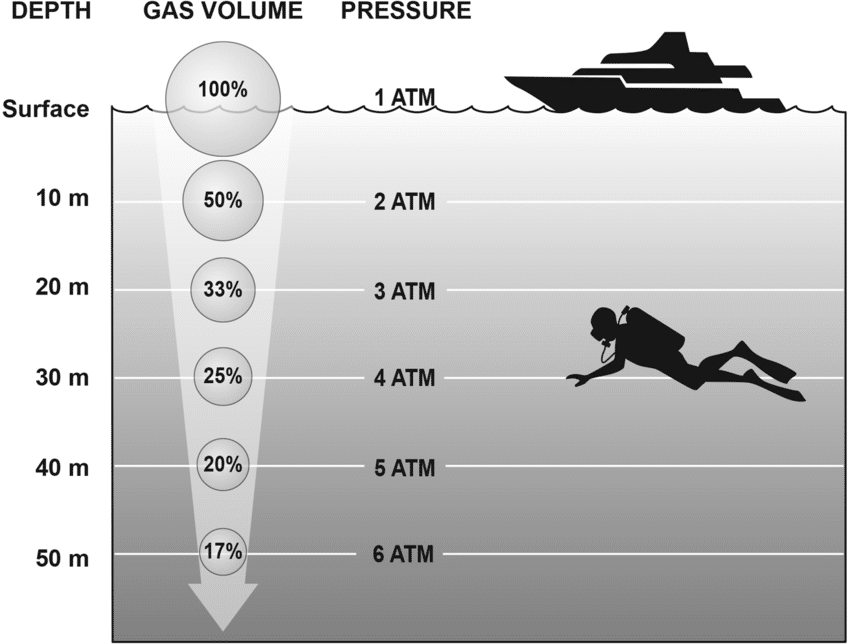
DCS occurs when nitrogen bubbles form in the bloodstream and body tissues due to a rapid reduction in pressure during ascent. These bubbles can block blood vessels, cause inflammation, and lead to symptoms ranging from joint pain and fatigue to more serious neurological problems.
Thankfully, for recreational divers, the risk is very low when dives are planned properly.
Following a safe dive profile, ascending slowly, and completing any required safety or decompression stops dramatically reduces your chances of developing DCS.
Some factors can increase the risk, including:
- Being overweight
- Dehydration
- Certain heart conditions, such as a Patent Foramen Ovale (PFO)
- Age and gender
- Flying too soon after diving
- Strenuous exercise after a dive
- Cold water
Most of these risk factors can be managed. Stay hydrated, dive conservatively, stick to your computer or dive tables, and never rush your ascent.
Barotrauma (Ear Injuries)
Burst eardrums are another common fear, but they’re almost entirely preventable.
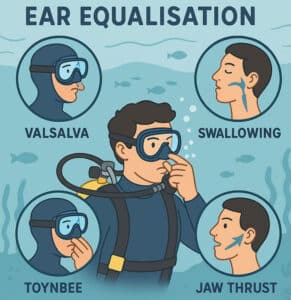
As you descend, the pressure around you increases, so you need to equalise the pressure inside your ears. Fortunately, there are several simple techniques:
- Pinch your nose and gently blow (Valsalva manoeuvre)
- Wiggle your jaw
- Swallow
- Use the Frenzel manoeuvre
The golden rule is simple: if your ears hurt, stop descending.
Ascend slightly until the pressure eases, try equalising again, and if it still doesn’t work, end the dive. No dive is worth damaging your ears.
Occasionally, divers experience ear discomfort on the way back up, known as a reverse squeeze. This happens when trapped air can’t escape due to congestion or fluid in the sinuses. If this happens, pause your ascent and allow the pressure to equalise before continuing slowly.
Marine Life
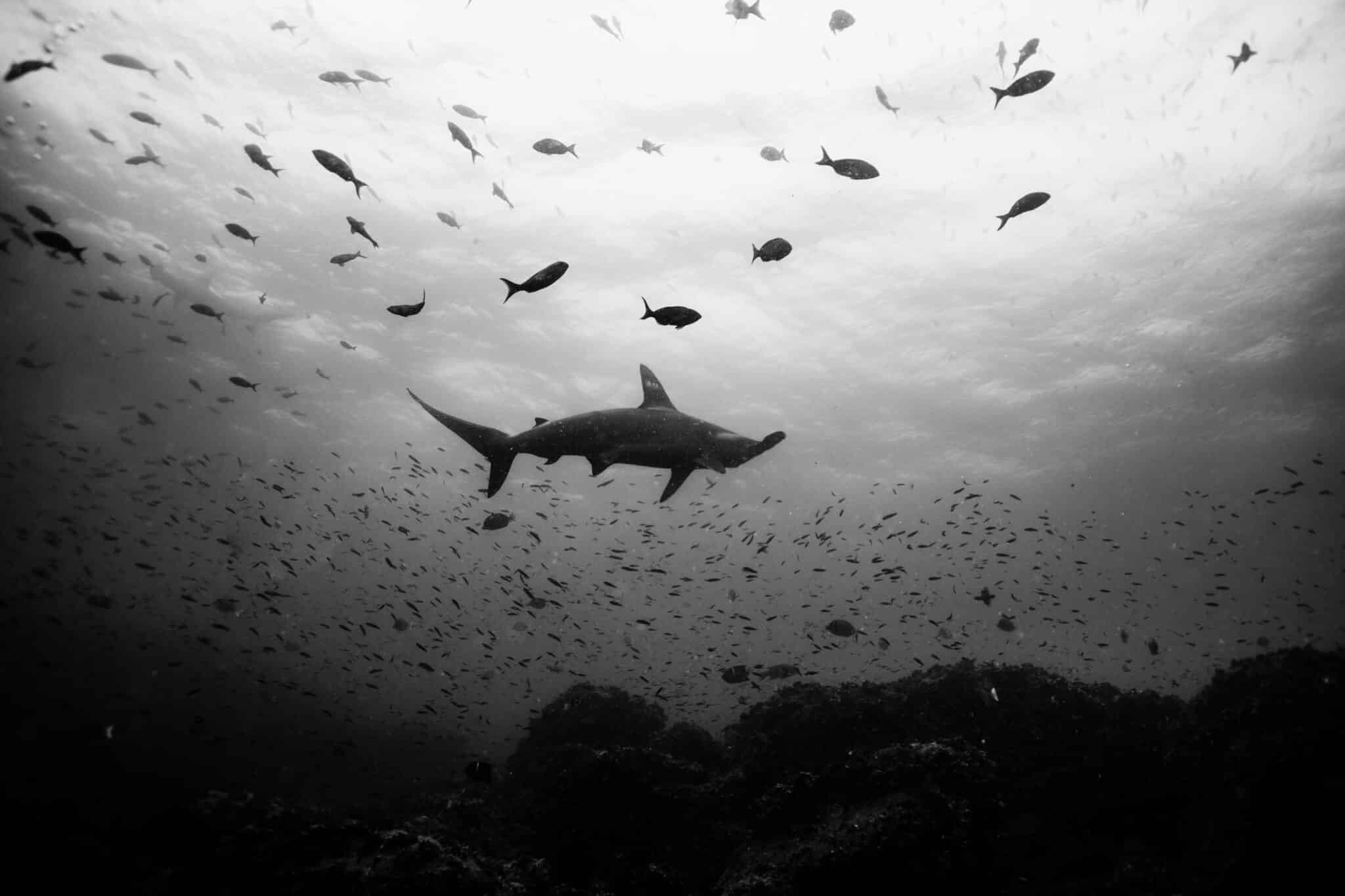
Let’s talk about sharks.
Movies like JAWS have convinced generations that sharks are ruthless killing machines waiting for divers. In reality, shark attacks are incredibly rare, and sharks are often far more afraid of us than we are of them. The bubbles produced by scuba divers usually send them swimming in the opposite direction.
Ironically, there are other underwater creatures you’re much more likely to have problems with.
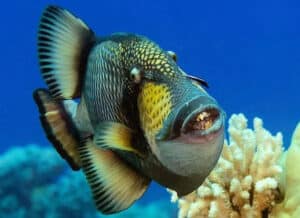
Titan Triggerfish
These fish are extremely territorial, especially during nesting season. They will defend their nests and aren’t afraid to bite.
If one starts chasing you, swim away horizontally with your fins facing the fish rather than swimming straight upwards through its nesting territory.
Lionfish and Stonefish
These fish aren’t aggressive, but they are venomous. They won’t chase you, but if you touch one, you’ll know about it. The simple solution? Look, don’t touch.
Other Divers
Honestly?
Other divers are often a bigger concern than marine life.
People can be unpredictable underwater. Good buoyancy, awareness, and sticking close to your buddy are often far more important than worrying about sharks.
Running Out of Air
One of the biggest fears people have is this:
“What happens if you run out of air at 30 metres?”
Despite what many people think, running out of air is almost always preventable.
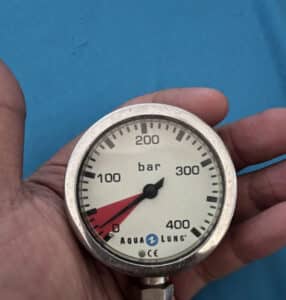
In around 99% of cases, it’s due to diver error, usually someone getting distracted and forgetting to check their pressure gauge.
If you regularly monitor your air supply and turn the dive with plenty of gas remaining, you shouldn’t run out of air.
On the rare occasion that equipment fails, such as a burst high-pressure hose, you’ll notice your air disappearing very quickly.
That’s exactly why we dive with buddies.
A nearby buddy can provide their alternate air source, allowing both divers to make a safe ascent together.
After 2,610 dives, I’ve never run out of air.
The secret?
Read your gauges.
Equipment Failure
Like any adventure sport, scuba equipment can fail.
The good news is that modern dive equipment is incredibly reliable when it’s looked after.
Regular servicing, rinsing your gear thoroughly after every dive, and storing it correctly all help extend its lifespan and reduce the likelihood of problems.
Even so, failures do occasionally happen, which is why training is so important.
Practising skills such as breathing from a free-flowing regulator, sharing air with a buddy, or disconnecting a stuck low-pressure inflator hose means you’re prepared if something unexpected happens.
These situations are rare, but good divers keep their emergency skills fresh.
So… Is Scuba Diving Safe?
After reading about decompression sickness, ear injuries, equipment failures, and territorial fish, you might be thinking scuba diving sounds anything but safe.
But here’s the reality:
Scuba diving is a very safe activity when you dive within your training, follow safe procedures, and keep your skills current.
The risks are real, but they’re well understood, taught from day one, and largely manageable with good planning and sensible decision-making.
Respect your limits.
Plan your dives.
Check your air.
Look after your equipment.
And don’t waste your dive worrying about that friendly shark swimming in the distance.
Happy bubbles!