Ear Pain and Scuba Diving: How to Protect Your Ears Underwater
There are few things more frustrating than sitting out a dive because your ears hurt. You already know how the story ends: everyone surfaces excited, talking about the incredible bucket-list animal they saw… and you were stuck on the surface, uncomfortable and disappointed.
The good news? Many ear problems are preventable if you understand how your ears work and take simple steps to protect them.
Understanding the Ear
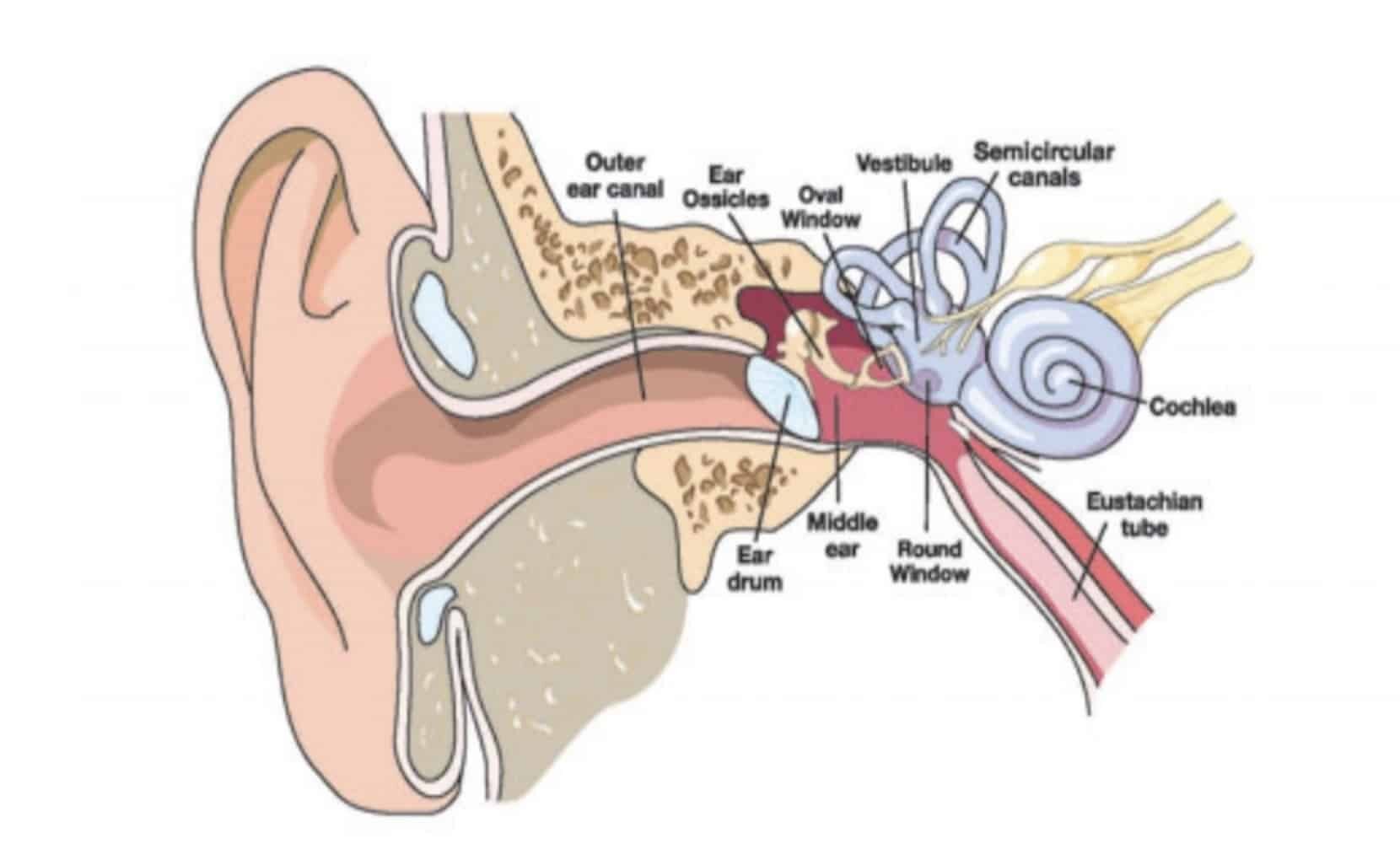
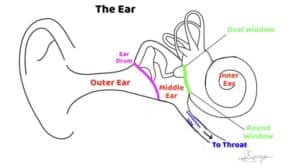
The ear has three main parts: the outer ear, middle ear, and inner ear. There are many small structures involved, but we’ll leave the detailed anatomy to the doctors.
Your eardrum separates the outer ear from the middle ear, and this is where most dive-related problems begin. The two most common causes of ear pain when scuba diving are:
- Difficulty equalising pressure
- Outer ear infection (otitis externa)
Equalisation Pain
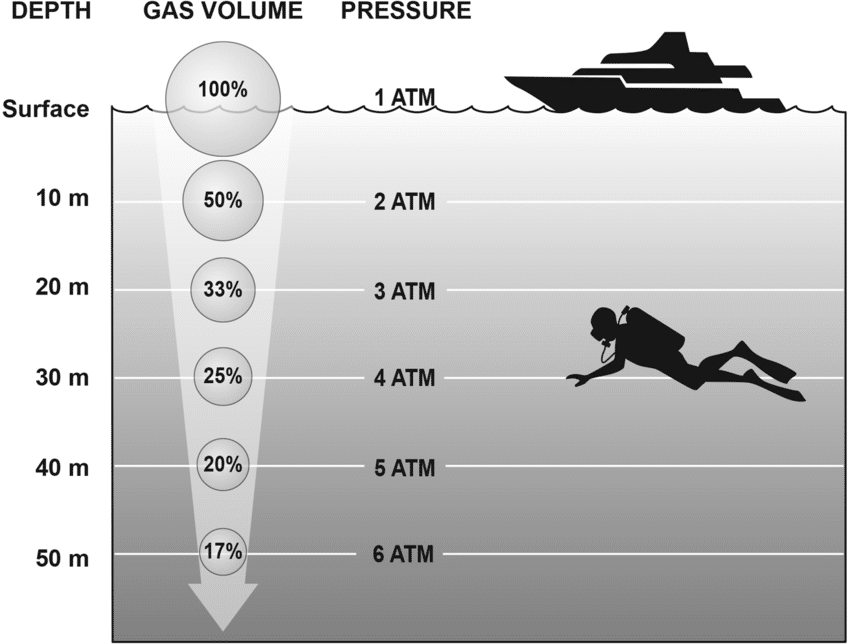
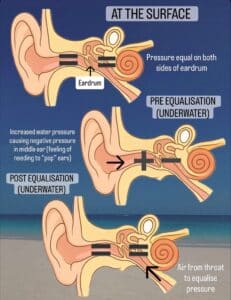
At the surface, your ears experience normal atmospheric pressure. As you descend underwater, the surrounding pressure increases. This higher external pressure creates a relative negative pressure in the middle ear, which causes the feeling of fullness and discomfort.
Equalising allows air from your upper throat (pharynx) to enter the middle ear, balancing the pressure with the surrounding water.
When your ears are equalised properly, there should be no pain.
If you cannot equalise, increasing water pressure forces the eardrum inward, creating a vacuum effect due to the pressure imbalance. If descent continues without equalising, the eardrum can become inflamed, bleed, perforate, or even rupture.
Proper equalisation techniques help prevent this:
- Valsalva manoeuvre – pinch your nose and gently blow against closed nostrils
- Frenzel manoeuvre – pinch your nose, press your tongue to the roof of your mouth, and contract throat muscles
- Swallow
- Gently wiggle your jaw
If your ears are not equalising, do not continue descending. Signal to your buddy or dive professional that you are having difficulty. Ascend slightly to reduce pressure, then try equalising again. If your ears still do not equalise, it is safest to end the dive.
Outer Ear Pain (Otitis Externa)
Most outer ear issues related to scuba diving are caused by repeated water exposure, similar to what happens with frequent swimming. Constant water movement in the ear canal dilutes the ear’s natural acidic environment, making infection more likely.
Symptoms commonly include:
- Ear pain both at the surface and underwater
- Tenderness when touching or moving the ear lobe
- A feeling of irritation or fullness
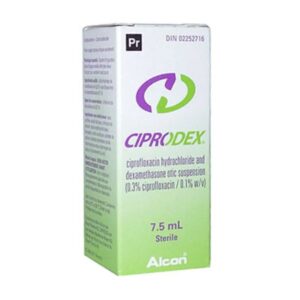
Treatment usually involves medicated ear drops containing antibiotics to treat infection and steroids to reduce inflammation. Prescription drops such as Ciprodex are particularly effective.
Typically, drops are used four times per day. A helpful technique is:
- Lie down with the affected ear facing upward
- Place the drops into the ear canal
- Gently massage around the ear to help distribute the medication
- Remain lying down for at least three minutes to allow the drops to absorb
- Sit up slowly with a tissue ready, as excess liquid may drain out
- Repeat on the other side if needed
Symptoms often improve quickly, but treatment should usually continue for about five days.
If symptoms do not improve, the ear canal may be too swollen for drops to penetrate effectively. In this case, oral antibiotics may be required.
Pain relief is also important. Paracetamol (also called acetaminophen or Tylenol) 1 g every six hours can help. If appropriate for you, ibuprofen 400 mg (Advil) can also reduce pain and inflammation.
Always consult a healthcare professional before starting medication, particularly if you have allergies or medical conditions.
Prevention
For divers prone to otitis externa, prevention is simple and very effective.
A commonly recommended mixture is a 50/50 solution of alcohol and vinegar in a dropper bottle. Apply two drops into each ear after a day in the water.
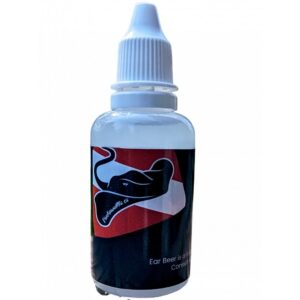
The alcohol helps dry the ear canal, while the vinegar restores the natural acidic environment that helps prevent bacterial growth. This mixture is widely recommended, including by military dive programs, and has been shown to significantly reduce ear infections.
Protecting your ears protects your diving. Ear problems can interrupt trips, limit training, and in severe cases even end dive careers.
Take care of your ears, equalise early and often, and address small problems before they become big ones. Your future dives will thank you.