Dive Like a Pro: Mastering Buoyancy Control
When I’m teaching an open water course, I always ask my students if they think they should swim horizontally or vertically underwater. They almost always say horizontally. Why? Because if you swim vertically you just swim up to the surface, then what’s the point in diving, you may as well snorkel! This body positioning is called ‘trim’ and good trim is essential for good buoyancy, but let’s back up… what is buoyancy anyway?
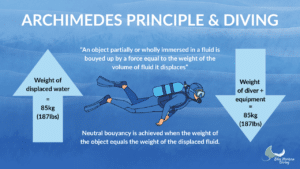
The dictionary definition of buoyancy is: the upward force that a fluid (like water or air) exerts on an object immersed in it. This force opposes gravity, determining whether an object will float, sink, or remain suspended.
In simple terms, Buoyancy is your ability to float, sink, or stay neutrally balanced underwater. In scuba diving, perfect buoyancy means being able to hover effortlessly without constantly swimming up or down. We are able to control our buoyancy in a number of ways including:
- Proper weighting
- Use of the buoyancy control device (BCD)
- Breathing techniques
Proper weighting
As a diver, you often need weights to help you and all your gear sink. Too often, people wear far too many weights. Having worked in the industry for many years, I have had the same conversation with people many many times, it goes something like this:
(Person is a female, 5 feet tall, very slim, wearing a 3mm wetsuit)
Me: hey! How many weights would you like today?
Them: last time I dived I wore 10kgs (≈20 pounds)
Me: that seems like an awful lot of a weights for a person of your size, did you have on a drysuit or were you overweighted for a specific reason?
Them: no, that is just what my instructor had on me for my open water dives
Me: okay no worries, how about we try something new today, perhaps 3kgs (6 pounds). You’ll need to breathe out a lot at the surface but should be okay after 2 meters. If you don’t sink, I have spare weights we can give you
This is an incredibly common situation that stems from lazy instructors overweighting their students so they can sink to the bottom when performing skills. The student never learns how to become properly weighted and spends dive after dive struggling with their buoyancy.
Rather, it’s important we teach how to do a proper weight check and learn how to position weights properly- guarantee you’ll need less than you think!
To perform a weight check:
- Have an empty tank (aluminium tanks float when empty so we need to account for this)
- Deflate your BCD at the surface and HOLD a breath of air. With a full lung capacity of air, you should float at eye level
- Slowly release the breath of air. You should slowly sink below the surface as you release air from your lungs
- Adjust weights as needed. If you sink like a rock, remove a weight and try again, or add if you’re floating too much
With this method, you should have just enough weights to sink when you breathe out, get under the surface of the water and begin your dive.
Keep in mind that you may need more or less weights in different situations, for example:
- Salt water adds buoyancy so you need more weights than in fresh water
- A steel tank is heavier than an aluminium tank and doesn’t float when empty so you will require less weights
- The thicker your wetsuit, the more weights you will need. I normally add 1kg for every 2mm increase of wetsuit then adjust from there.
Use of the BCD
Your BCD (buoyancy control device) exists to help you control your buoyancy. You can add air at depth to become neutral and remove air on ascent. To use your BCD effectively, you first need to understand how air compression and expansion works when scuba diving.
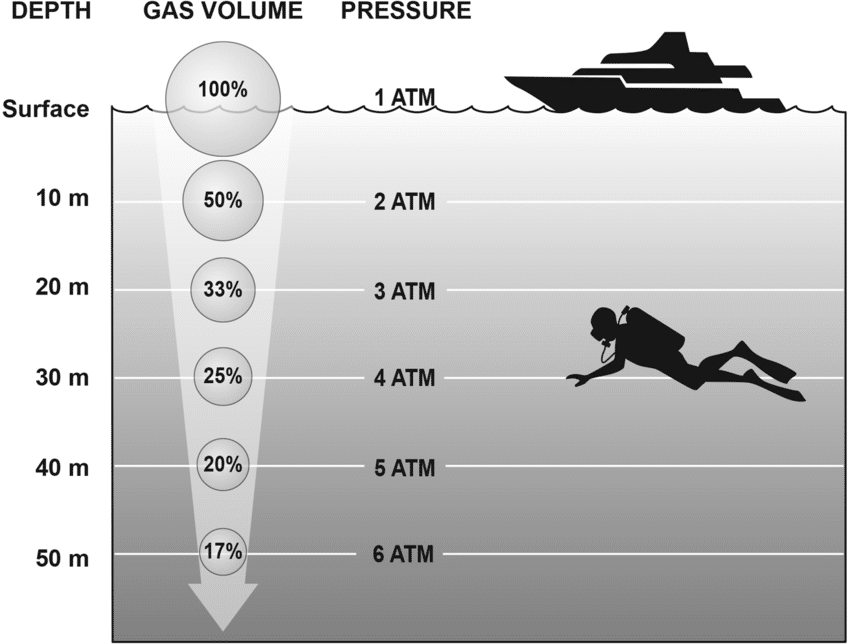
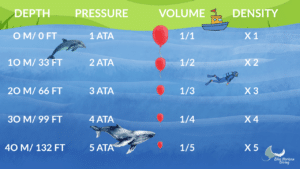
As you descend, pressure increases. At surface level you are at 1 atmosphere of pressure, at 10m you are at 2atm, at 20m, 3atm etc. as this pressure increases, it causes any air to compress. Therefore, if you get to 10meters and adjust your BCD for perfect buoyancy, then descend to 20m, you will be negatively buoyant and need to add more air.
The opposite is true on ascent and this is especially important. As you ascend, air expands. Any air you have added to become neutral will expand and you will become increasingly positively buoyant on ascent. If you fail to remove the expanded air from your BCD, this can quickly become an uncontrolled ascent, which puts you at risk for decompression sickness. Rather, on the ascent, slowly let air out of your BCD, accounting for any air that has expanded. You can still remain neutrally buoyant, you do not need to remove all air, just that that has expanded.
Use your BCD sparingly, for minor adjustments, we use our lungs (see next section). When using your BCD, it’s best to add small bursts of air, NEVER hold down the inflate button when underwater.
Breath control
On open circuit scuba (recreational setup) where your bubbles are released into the water column, your lungs act as an important form of buoyancy control.
When you breathe in, your lungs expand. This increases the volume of air and thus makes you slightly more positively buoyant. When you breathe out, the opposite occurs. You become slightly more negatively buoyant due to a decrease in air volume.
Therefore, we use this volume change to our advantage. If you need to rise slightly, take a large breath in, if you need to sink slightly, exhale a large breath. This way, you don’t need to use your BCD for minor adjustments and buoyancy becomes less fiddly.
Divers are told from day 1 to breathe slowly, deeply and never hold your breath. Shallow breathing results in a small volume of air being kept in your lungs, which makes it more difficult to sink. If you breathe all the way out when exhaling, it will be easier to sink below the surface and you will need less weights.
Trim
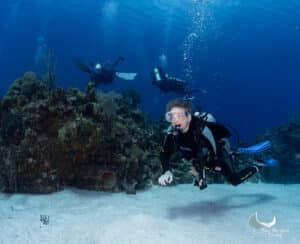
Trim is how you’re positioned in the water. The better your trim, the more streamlined you are, the less drag you have, the more air you conserve and the better your buoyancy is.
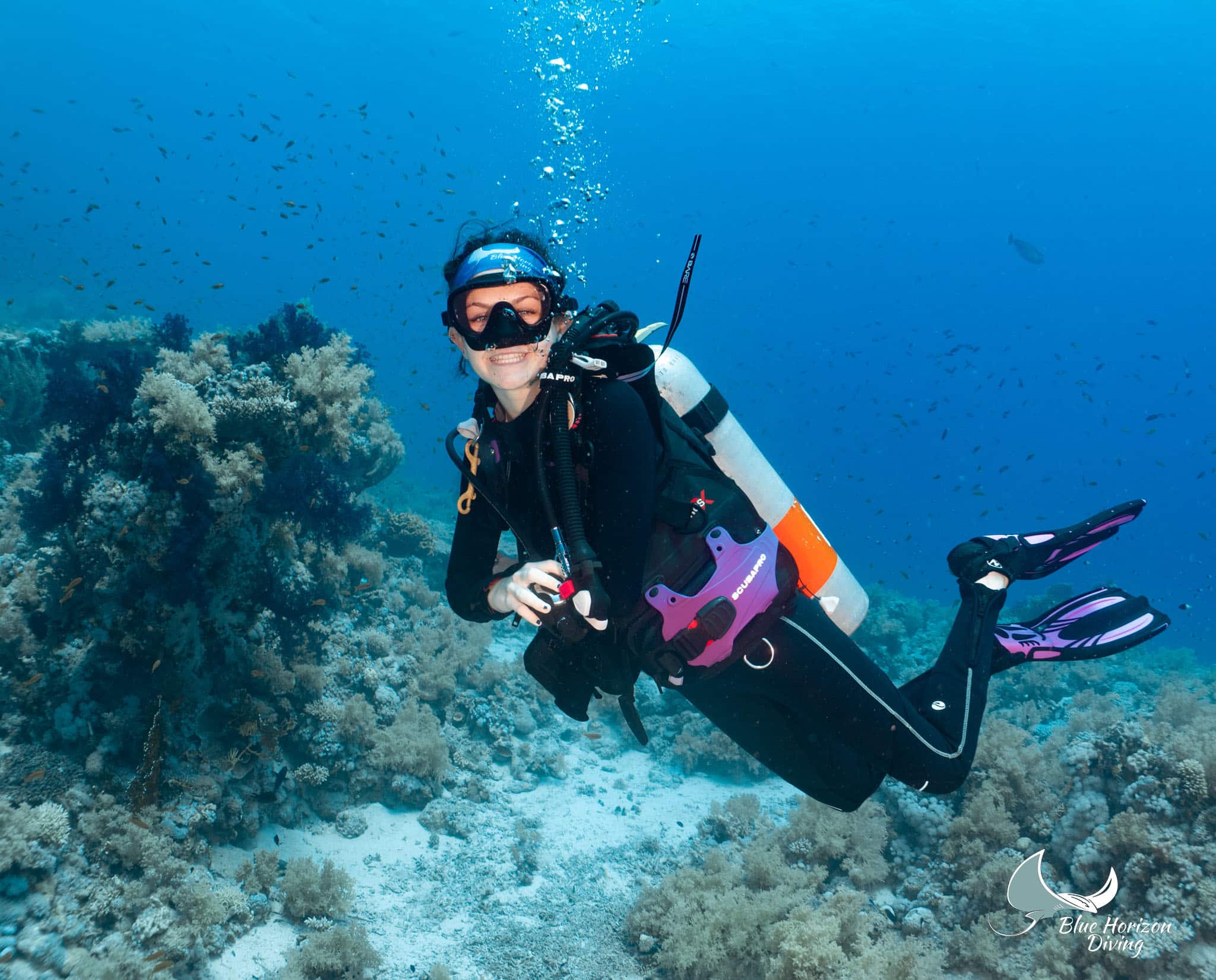
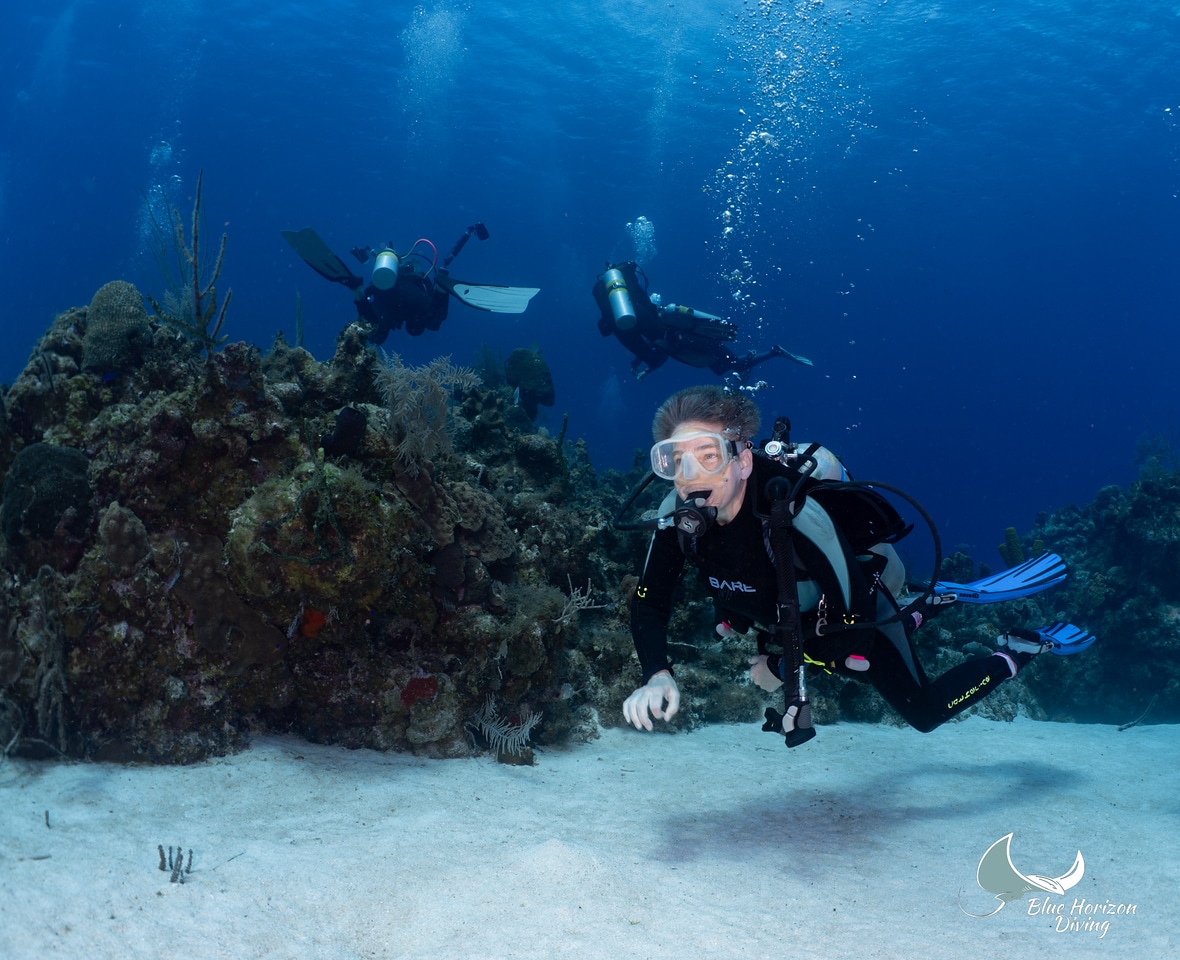
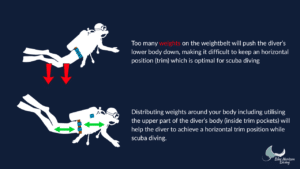
An ideal trim position is having your body horizontal, arms tucked in, head slightly up and feet up. This way when you kick, you go forward, not up or down.
If you feel like your feet are rising or sinking, you likely need to adjust the positioning of your weights. Try moving some weights to the trim pockets at the back of your BCD.
When diving with a steel tank, smaller people tend to feel the affects of the heavy tank much more. Try moving all weights to the front of your weight belt or pockets to account for the tank.
Final thoughts
While I’ve just gone on and on about how important buoyancy is, you don’t have to be perfect from the get go. It often takes people many dives, if not hundreds of dives to perfect their buoyancy. Keep practicing. There are a few things you can do to practice your buoyancy on any dive:
- Aim to move less than a meter during your safety stop, without holding a line
- Stop all kicking and hand movements and hover in mid water
- Practice breath control over rock formations
- Adjust your trim and find your comfortable position
- Practice buoyancy skills
If you find that you’re really struggling with buoyancy or proper weighing, ask a dive professional or book a course to learn even more. The better your buoyancy, the more comfortable your future diving will be!!